On Urdu
From neglect to revival…
تجدید اردو Revival of Urdu
Reviving Urdu is a project I took on several years ago. I was realising that, without nourishment, this beautiful tree within me would wither and die.
A personal awakening
ذلت کا گھونٹ
A sip of humiliation.
However, I soon found out that we often slip and fall along the way on this path of learning languages (or re-learning in this case !). Let me take you back to this scene:
I’m in the living room, reading aloud short stories from my school books.
An unfamiliar word.
I stumble — another mispronunciation — laughter erupts.
Granted, reading without diacritics (accent marks) was a steep climb when I hadn’t done it in years, and this led to funny pronunciations.
The rallying words of Epictetus then rang in my ears:
“…but if you are conquered by them [teasing], you will incur a double ridicule.”
— Epictetus, Enchiridion
To give up because of humiliation and embarrassment — would only increase the pain. Humiliation leads to humility. It may seem like we are contracting, yet it is the perfect opportunity to expand and grow.
I started to see the funny side too. Perhaps this is the price paid for neglect, and the price to pay for revival.
Urdu background
فَاصْبِرْ صَبْرًا جَمِيلًا
“So persevere with a beautiful perseverance.” (Qur’an 70:5)
Parts of our identity — race, colour, language — shape our lives.
I recognised the danger we were in. The danger of losing our identity.
Of losing touch with ourselves.
Even years before deciding to revive my Urdu skills, we as a family were wary of our speech steadily having more English words than Urdu — even where Urdu had adequate and eloquent options. Urdu can easily accommodate new words, yet felt like a betrayal of our cultural heritage.
I had completed my education up to Year 5 in Urdu, after which it was only informal learning and speaking at home. Still, I am grateful for this — it allowed me to keep practising Urdu, and we hadn’t switched completely to English. This fact kept my mother tongue alive, something I try not to take for granted. It is also a stark reminder that, had household conditions been different, on an alternative timeline, I too might not have retained this ability. This erasure feels like a scary prospect. I realised that this language was a gift — to be grateful for.
Language and emotional identity
For me, language plays a huge part in accessing emotions and speaking from the heart. It is the subtle shifts in melody, rhythm, and tone that can convey so much.
When I speak in English I often tend to go towards the more analytical and intellectual sides of myself, it seems mechanical. Switching to Urdu melts away any pretence and rigidity as I flow into its warmer register. The sense of dislocation and alienation fades away as you feel yourself arriving back home. Urdu played a huge part in my childhoold and connecting with relatives whilst speaking it, helps me get back in touch with those parts of myself.
Now, I often feel exhaustion if the day only consists of English consumption, the pain of disconnection with a core part of myself.
I feel both guilt and pain as I realise how many works I’ve read in English as compared to Urdu. Like Sir Syed Ahmed Khan highlighted, this doesn’t mean that we don’t learn English at all, but that we have a balanced approached to both.
There is an amazing world of literature out there, waiting to be discovered (Iqbal, Ghalib, Faiz Ahmed Faiz, the list goes on).
The intimacy, fulfilment, and inspiration I have felt when engaging with the Urdu are beyond words. This access comes through effort and persistence. It’s easy to keep reading in English, but the challenge — and reward —for me, now lie in choosing Urdu.
What Is Urdu?
The word Urdu comes from the Turkic word ordu, meaning “camp” or “army,” indicating its origins. It originally meant zabān-i-urdu — “the language of the camp.”
Linguistically, it is an Indo-Aryan language, a descendant of Sanskrit. It has been heavily influenced by both Arabic and Farsi in style, vocabulary, and register. This fusion allows us to converse with speakers of Hindi and gives a massive head start in learning Arabic and Farsi.
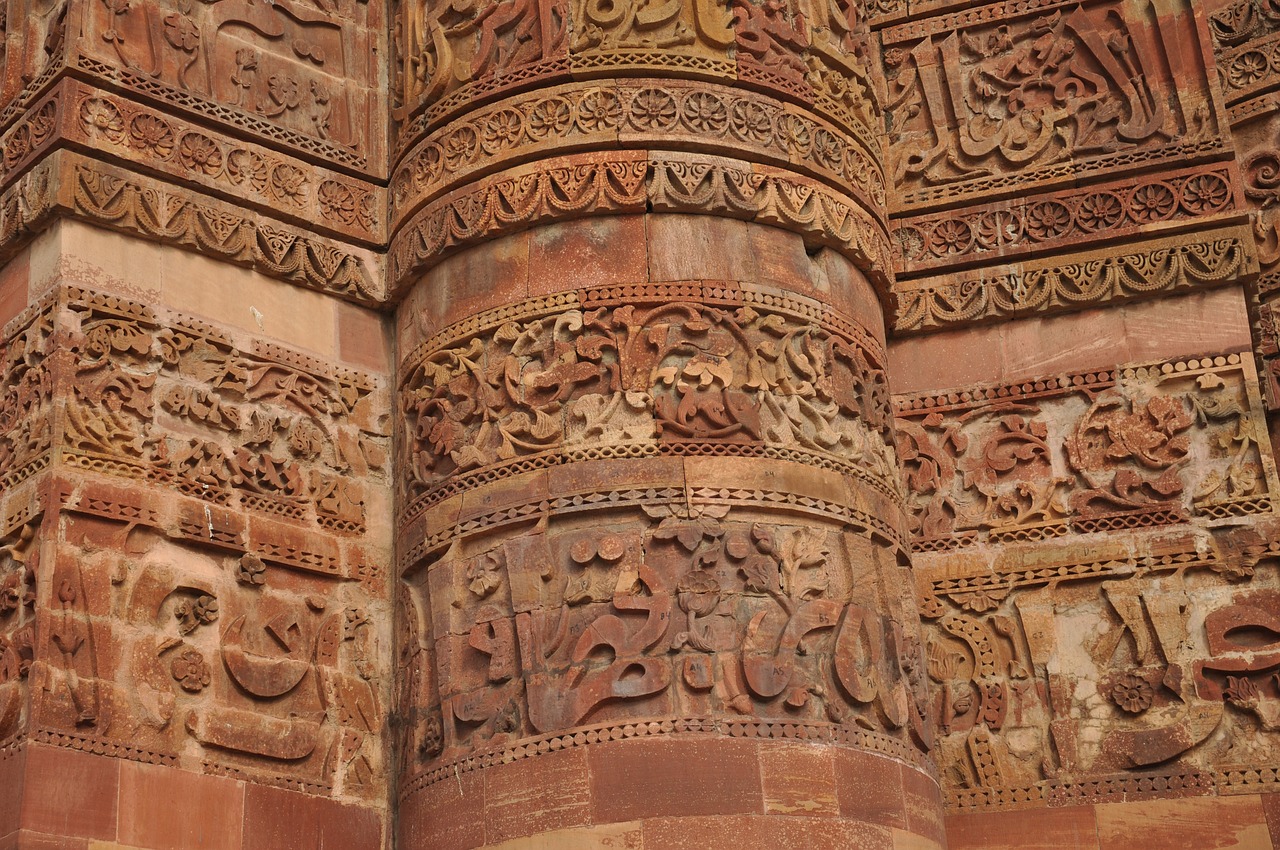
Urdu is written in the Perso-Arabic script. I admire the beauty of the script every time I see it. It uses the Nastaliq calligraphic style of Farsi, which is similar yet subtly different to the common Naskh script of Arabic.
English and Urdu share a common ancestor in Proto-Indo-European. There are also many words shared with English (cognates) — hither, thither, and wither correspond to ither, uther, and kither. There are many more examples when we are alert to sound patterns.
The most sublime moments arise from rhyme, wordplay, and the general musicality of the language. Much of its rhythm comes from the ability to break into spontaneous poetry.
Clang words give Urdu its spice and spark. In everyday speech, speakers can add a rhyming word to any part of their speech and have it make sense (nihari bari pyari, theek thaak, haal chaal to name a few). This gives it a unique sense of playfulness and humour.
Colonial Past - Superiority and Inferiority
There was a systematic attempt during the colonial era to create a class that would think and speak in English:
“We must at present do our best to form a class who may be interpreters between us and the millions whom we govern; a class of persons, Indian in blood and colour, but English in tastes, in words, in opinions, in morals, and in intellect.”
— Thomas Babington Macaulay, Minute on Indian Education, 2 February 1835
This quote from ‘Western Civilisation, Islam and Muslims’ by Syed Abul Hasan Ali Nadwi shook me to the very core. It pierced the heart — it hurt to see how this had played out. How institutions like schools could become grey factories, churning out replicas for the sake of Empire.
Perhaps it is no longer overt, but its effects can still be felt — still shaping both beliefs and behaviour.
Seeing Urdu fall out of favour, not spoken in the diaspora as well as among the privileged classes in Pakistan, fills me with sadness. The voices of our ancestors, choked.
As Muhammad Asad highlighted in Islam at the Crossroads copying the outward forms of another nation, over time leads to internalising the attitudes and beliefs that nation represents too. Indeed, this may be part of the legacy of colonialism — where aspects of the ruling class were imitated.
It is as if donning the clothes of another world could make a person “whiter”. Copying not only in clothing but in custom/language, to be seen as ‘better’ or ‘higher’. Internalising that outlook on life, is like wearing a set of clothes that don’t quite fit. Yet we wear them to supposedly ‘fit in’. It may look OK on the outside, but do we really feel authentic on the inside?
The moments where I’ve felt the deepest emotions of anger, revulsion, and betrayal are when this happens. Displaying knowledge of English is often seen as a marker of superiority in certain circles. Speaking in English apparently shows superiority, that it’s better than the “commoners” who haven’t “evolved” from their native tongue. Yet who is really regressing ?
This thread still runs in our collective psyche, from skin whitening to language choice. What are we trying to scrub away?
Towards revival - healing the disconnect
If we are to be considered “other,” why abandon the very parts that make us unique? If we need an interpreter to speak to our own people, how distant would we feel? Do we really know ourselves?
“O mankind!… We made you into peoples and tribes so that you may know one another.” (Qurʾān 49:13)
This does not mean judging ourselves or others harshly, but rather seeking forgiveness for not knowing and not understanding the importance of our native language — and acknowledging the harm that ignorance can cause, both to ourselves and to our common language.
Understanding and integrating the parts we may have neglected or abandoned allows us to remain loyal to our core selves. It is crucial that we deal with those parts of ourselves that feel insecurity, inadequacy, and inferiority. These feelings without being acknowledged and processed can mislead us to disowning a core part of ourselves. If we are to fully embrace our heritage and our tradition, Urdu and language are key areas where this can take place.
Dealing with the grief and missed opportunities has been crucial in my journey of learning and relearning. It is each individual’s responsibility to choose the path they now wish to take. It always returns to what is within the sphere of influence — which actions are available to us.
Just like learning any language, following the comprehensible input concept — reading and listening to texts we enjoy in order to absorb the language — worked and still works well. The power rests in our hands — and tongues.
Whenever darkness or ignorance seems to prevail, it is a call to action. This fight is not only for Urdu but for all languages facing a similar threat. I do acknowledge that Urdu itself has at times dominated at the expense of local languages such as Punjabi/Pashto/Sindhi, it is just as important that local languages be given the respect and value they deserve.
Accessing Iqbal in the original in order to fully appreciate the depth of wisdom contained in his writings may be the goal, and it can start with a few simple steps. Admittedly, it does feel like going against the stream when choosing to engage in Urdu, because most things are already in English. Instead, reading poetry and short stories in our chosen language can revive this love for our language. Instilling this sense of wonder, awe, and enthusiasm is the best way to safeguard Urdu’s legacy.
Calling relatives and conversing with them is an incredible way to connect with our wider family — and to have heart-to-heart conversations. We may even pick up a few words along the way.
The best teachers I have had were those who instilled a love for the subject within me. When we instil love for a subject, we safeguard its legacy — because people want to learn it, rather than feeling they should or seeing it as an imposition.
Conclusion
So this was my story of reviving Urdu.
It is proof that what is lost can be rediscovered.
The sip that was sour can turn sweet.
اردو زِنده باد
Diving deeper
Ready to revive or explore the rich world of Urdu ?
Here are some resources I found helpful:
🎧 Podcasts
-
Urdu Adab - Short stories
-
For more on the shared roots of English and Urdu : History of English – The Proto-Indo-European Connection